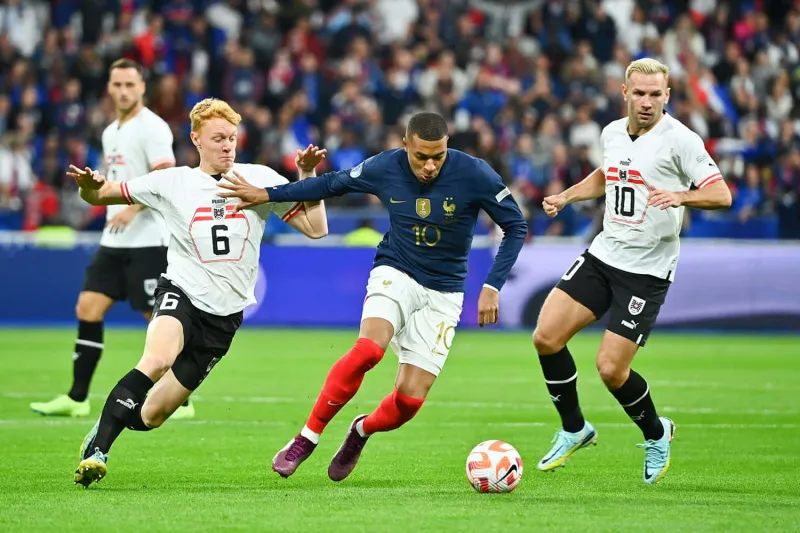
Orange Slices and Seed Phrases: The Suburban Soccer League Teaching Kids Crypto Before Corner Kicks
Photo: Unknown, CC BY-SA 2.0, via Wikimedia Commons
Saturday morning atutopin Creek Park, and the smell of cut grass is competing with the smell of gas-station coffee. Parents fold into camp chairs. Kids in oversized jerseys chase a ball that's clearly too big for them. And on a folding table near the concession stand, a laminated leaderboard shows something you'd never expect at a U-12 rec league: a column labeled "Portfolio Value."
Welcome to the kid's table bracket — the most talked-about experiment in suburban youth soccer this season.
The Bracket That Trades Back
The concept, cooked up by the Cherry Creek Youth Soccer League and quietly piloted with 140 families, is simple enough. Every kid in the league gets a mock wallet loaded with 100,000 units of pretend bitcoin. Throughout the Bitcoin Football Cup season, they use it two ways: making bracket predictions in the league's prediction pool, and "trading" fictional fan tokens tied to the tournament's participating clubs.
Standings update every Monday. The kid with the best combined record — predictions plus portfolio — gets their name on a plaque at the end-of-season pizza party. No real money moves anywhere. Ever. That's the line league president Dana Whitfield repeats like a mantra.
"We're not teaching kids to speculate," Whitfield says, walking the sideline between games. "We're teaching them that a leaderboard is just a spreadsheet, that prices go up and down, and that a prediction is a claim you have to own. If my son thinks Team X wins the group, fine — the bracket says so, and everybody can see it."
The financial literacy angle came first, actually. A parent who works at a Denver fintech firm offered to run a workshop for the league's eighth-graders. It snowballed. Now third-graders are explaining what a wallet backup is to each other in terms that sound suspiciously like how they describe soccer positions.
"The cold wallet is like the goalie," one nine-year-old tells me, completely unprompted. "It doesn't move around a lot but nothing gets past it."
His father, standing right there, looks somewhere between proud and alarmed.
The Skeptic in the Whistle
Not everyone's buying it. Coach Rick Delgado has been coaching youth soccer in Colorado for nineteen years, long enough to have coached some of the current parents. He agreed to let his team participate — and agreed to be quoted — but his feelings are complicated.
"Best and worst idea I've ever seen, and I've seen a parent try to bring a portable espresso machine to a tournament in Grand Junction," Delgado says. "The worst part is what you'd expect: kids checking fake prices when they should be checking where the open man is. I had to ban phones at practice because two of my defenders were 'rebalancing.'"
But Delgado keeps going, and this is where it gets interesting.
"The best part is the losing. Real losing, in front of everybody, with a paper trail. These kids lose a match and they mope for ten minutes and get orange slices. But when their whole mock portfolio drops forty percent because they put everything on one token? They come to practice quiet. Thinking. One of my kids asked me what 'diversify' means. Nobody ever asked me what 'diversify' means before."
His compromise: the portfolio talk happens after the final whistle, never before. Soccer first, spreadsheet second. The kids, reportedly, have accepted the deal.
What the Parents Actually Think
The league surveyed participating families midway through the season, and the results split along predictable-but-useful lines. Around 70% of parents said the program sparked more conversations about money at home than anything else they'd tried. A smaller group — maybe a fifth — worried the whole thing was just gambling with extra steps, even with play money.
Whitfield doesn't dismiss that concern. She points to the guardrails: no real currency, no real prizes beyond the plaque, mandatory parent co-signature on the enrollment form, and a curriculum module on why people lose money in markets. There's also a hard rule that no kid may talk about actual buying or selling of anything, crypto or otherwise, at league events.
"If a parent wants to take their kid to open a real custodial account someday, that's a family decision," she says. "We're teaching the reading, not the driving."
A Sign of What's Coming
The Bitcoin Football Cup's own fan prediction ecosystem has grown up fast, and the kids' table bracket might be the most honest preview of where fan engagement goes next. The Cup's mainstream prediction pools skew adult, mobile-first, and prize-driven. This league's version is slower, dorkier, and — if you listen to the kids — more fun.
Three leagues in Texas and one in Ohio have already reached out to Cherry Creek about copying the format, and Whitfield says she'll share the templates for free, mock wallet included. Her one condition: every copycat has to keep the pizza party.
"You can digitize the wallet," she says. "You can't digitize the pizza."
Back at the park, the U-12 game has devolved into its usual beautiful chaos — a goal kick taken by the wrong team, a celebration for a shot that went wide. Delgado watches, arms crossed, and offers his final verdict on the experiment he still can't fully endorse.
"Half these kids will forget every token they ever paper-traded," he says. "But they'll remember that their bracket was public, that they were wrong, and that it was fine. That lesson transfers. The rest is just a really elaborate scoreboard."
Then the whistle blows, and he goes back to coaching the part that matters to him: the throw-ins.