RVs, Routers, and Routing Payments: The Volunteer Mesh Keeping Cup Predictions Alive
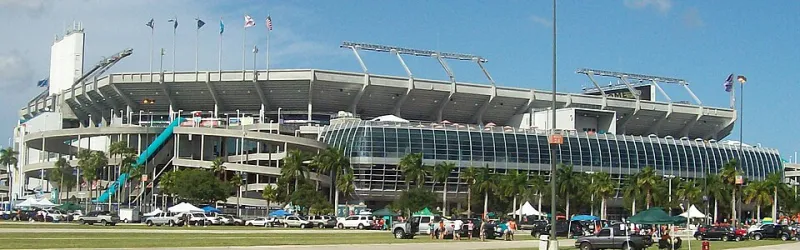
Somewhere in the parking lot of Bitcoin Football Cup's semifinal, a retired HVAC contractor from Toledo sat in a folding chair next to a modified RV roof rack, watching a terminal scroll routing statistics like it was the fourth quarter of a Super Bowl.
"Channel's healthy," Dale Muncie told me, barely looking up. "We're good till the trophy lift."
Dale is one of roughly 140 volunteers in the Cup's Node Corps — the fan-run mesh network that has quietly become the load-bearing wall of in-stadium prediction markets. Without them, the whole thing collapses into spinning wheels and angry group texts.
Why the Stadium Needs Your Camper
Here's the problem nobody at the league wants to say out loud: conventional stadium Wi-Fi was never built for what the Cup is asking of it. A typical venue network handles ticket scans, some video, maybe a stat refresh. The Cup wants to process tens of thousands of Lightning micro-payments per minute — every sat-denominated prediction, every head-to-head side bet, every in-app tip when a striker hits the crossbar.
The fix, cooked up by a small engineering collective called Meshline, was almost embarrassingly American: don't fight the stadium's infrastructure. Go around it. Build a mesh of private Lightning nodes hosted by fans in the parking lots, linked over directional radios, and hand off payments at the edge.
"The stadium's backhaul is a bottleneck," explains Priya Raghavan, one of Meshline's founding engineers. "But the parking lot? The parking lot is empty spectrum. We turned tailgaters into telecom."
A Day in the Life of a Node Operator
Joining the Node Corps isn't exactly a walk-on tryout, but it's close. Applicants need a node that's been up for at least 90 days, a decent channel balance, and — this is the part that surprises people — proof they can park where they say they'll park. Site placement matters. A node on a hill in Lot G can cover three times the throughput of one wedged behind a beer tent.
In exchange, operators get season passes, a branded antenna mast that looks suspiciously like a tailgating trophy, and a cut of routing fees. Nobody's getting rich. Dale cleared about $210 over the group stage. But ask him about it and he'll talk for twenty minutes about channel liquidity the way other fans talk about a backup keeper controversy.
"My wife thinks I'm insane," he says. "Then her book club wanted to run predictions at the quarterfinal and everything loaded instantly, and suddenly I'm a genius."
The Semifinal Stress Test
The real story came in the second semifinal, when a record wave of million-plus micro-payments hit the network in a single two-hour window. Early in the second half, one of the eight relay radios on the east side went down — heat, apparently, though nobody's confirmed.
What happened next is the part the Cup's own engineers still bring up in meetings. Three operators in adjacent lots rerouted automatically. Two more manually rebalanced channels from their phones while grilling. Total downtime for fans in the stands: about forty seconds. Most people just thought the app was being laggy.
"Forty seconds," Raghavan repeats, shaking her head. "A traditional payment processor would've needed an incident bridge and a post-mortem. These guys fixed it between flipping burgers."
Growing Pains and Gatekeepers
It's not all sunny parking lots. Some critics within the Cup community argue the Node Corps creates a two-tier system — fans near well-placed operators get snappy payments, everyone else waits. There have been squabbles over lot assignments, and at least one operator was quietly dropped after it came out he was prioritizing his own prediction transactions.
Meshline's response has been to open the books: routing stats for every node are public, and operator rankings are posted alongside the Cup standings. Transparency, it turns out, is a decent referee.
The 12th Man, Literally
There's a running joke among the Corps that they're the only fans whose presence is measured in millisatoshi throughput instead of chants per minute. But spend an afternoon in Lot G and the appeal makes sense. This is fandom with a torque wrench — the same instinct that turns a guy into the neighborhood's unofficial grill master, pointed at payment routing.
The Cup has already announced plans to expand the program to 250 nodes for next season, including a few solar-powered installations for the desert venues. Dale, naturally, has already applied.
"Anyone can paint their face," he says, cracking another beer. "Not everyone can hold a channel open through a penalty shootout."
Fair enough. The 12th man used to be noise. Now, at Bitcoin Football Cup, he's also a node.