One Chain, One Anthem: How a Nashville Bar Band Out-Voted the Major Labels
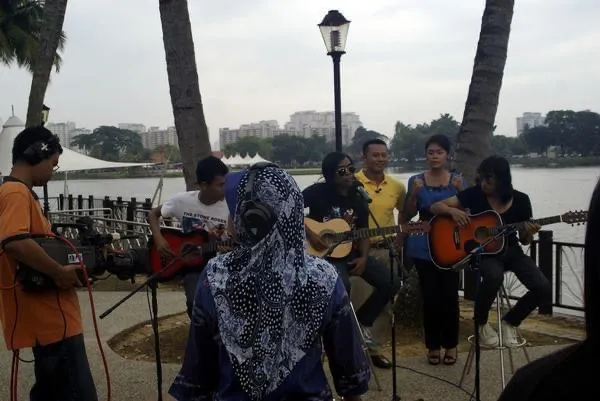
Photo: Tajal Yusoff, CC BY-SA 4.0, via Wikimedia Commons
When the Cup's organizers announced that the tournament's official anthem would be chosen by an on-chain vote of fan token holders, the smart money never blinked. Three major-label acts had submitted tracks. Production budgets ran into six figures. One of the songs had already been quietly licensed for a national TV spot.
Then a bar band from Nashville won the thing.
The Ballot Nobody Expected to Be Close
The rules were simple enough: every Cup token holder got one vote per wallet, cast over a 72-hour window in early spring, with results tallied publicly on-chain. Five finalists, three of them backed by labels with dedicated crypto-marketing departments. The other two? A Nashville five-piece called the Brass Ledger, whose entire recording budget was whatever they cleared on a Tuesday night at a honky-tonk off Broadway, and a solo artist from Boise who ultimately bowed out.
The assumption inside the Cup's marketing team, according to two people familiar with the deliberations, was that this would be a rubber stamp. Governance votes at crypto events tend to ratify whatever the biggest holders want, and the biggest holders had been wined and dined by label reps since the winter.
That's not how it played out. The Brass Ledger took 41% of the vote. The leading major-label entry managed 23%.
How a Honky-Tonk Band Out-Organized the Labels
The Brass Ledger didn't have a marketing department. What they had was a fanbase that already treated the band like a co-op — the group had been splitting merch revenue with season-ticket holders of a local lower-division soccer supporters club for two years before the Cup ever came calling.
So when the vote opened, the band didn't buy ads. They played free sets at Cup watch parties in twelve cities, from Kansas City to a dive outside Portland, and worked the crowd between songs like a stump speech. Frontwoman Dana Ruiz kept the pitch blunt: "We're not asking you to like country. We're asking you to vote for the song written in a van outside a US Open Cup qualifier."
Their campaign also understood something the labels didn't: on-chain voting means turnout is everything. The Brass Ledger's street team helped fans set up wallets at the shows themselves, walking people through the process on bar napkins and borrowed tablets. Wallets that had never touched a governance vote before suddenly showed up on the Cup's ballot — thousands of them, most casting a single vote and nothing else.
The labels, meanwhile, targeted whales. Big mistake. A handful of wallets holding huge token positions can't outvote a distributed base that actually shows up, and the public blockchain made every label's wallet-cluster blindingly obvious. Fans could see, in real time, which entries the big money was backing — and a chunk of them voted the other way out of pure spite.
When Marketing Becomes Governance
Here's the uncomfortable question the Cup now has to sit with: was this a vote, or a campaign? The line between fan engagement and vote-buying got blurry fast. The Brass Ledger gave away free tacos at one watch party. A label rival gave away hardware wallets pre-loaded with nothing but a link to their song. Neither broke any stated rule, because the Cup wrote almost none.
Organizers have since acknowledged the anthem vote was "a live-fire test" and that the next governance round will come with spending disclosure requirements. Whether that satisfies anyone is another matter. The structural reality is that once you put a marketing decision on-chain, you've invited marketing operations to run at it — and the outfits best at organizing people, not just capital, are going to keep winning.
Can Crypto Fans Actually Pick a Banger?
The most surprising verdict might be the musical one. The Brass Ledger's winning track, "Ninety Minutes and a Hard Fork," is a legitimately catchy singalong — verses about gas fees, a chorus built for stadium chants, a bridge that name-checks both Satoshi and a stoppage-time winner. Critics who expected a disaster got an earworm.
That tracks with a broader pattern in the Cup's fan ecosystem: the same communities that show up for prediction pools and watch parties are, it turns out, decent curators. They know what plays in a stadium because they're the ones in the seats.
The anthem debuts at the group stage opener, and the Brass Ledger will play it live before kickoff. Ruiz says the band has already turned down two label offers that came in after the results went public. "We've seen what happens when labels run the show," she told the Cup's media desk. "We'd rather have the wallets."
For a tournament that built its identity on letting fans own a piece of the action, the anthem vote may have been the most on-brand thing the Cup has ever done — chaos, tacos, and all.